Employer Branding Strategy for Tech
As global competition for tech talent intensified, ArcelorMittal Sistemas struggled to attract and retain professionals despite its strong reputation and innovative culture.
problem
ArcelorMittal had strong reputation in the industrial sector but low visibility and appeal among technology professionals. Its digital communication was fragmented, its hiring process unclear, and its social media presence inconsistent. Although ArcelorMittal was recognized as a solid global brand, ArcelorMittal Sistemas was barely noticed as a tech company — creating a gap between its internal reality and its external perception.
solution
The project establishes a new employer branding strategy that redefines how ArcelorMittal Sistemas connects with technology professionals. Grounded in Service Design principles, it turns fragmented interactions into a cohesive experience that reflects the company’s culture of collaboration and learning. This project strengthens the company’s presence in the IT market while building a brand experience that reflects the values of a new generation of digital professionals.
00

Main Chalange
How might we reposition ArcelorMittal Sistemas as an attractive and human-centered technology brand in a highly competitive market, aligning its identity and communication with the expectations of IT professionals?
Research & Discovery
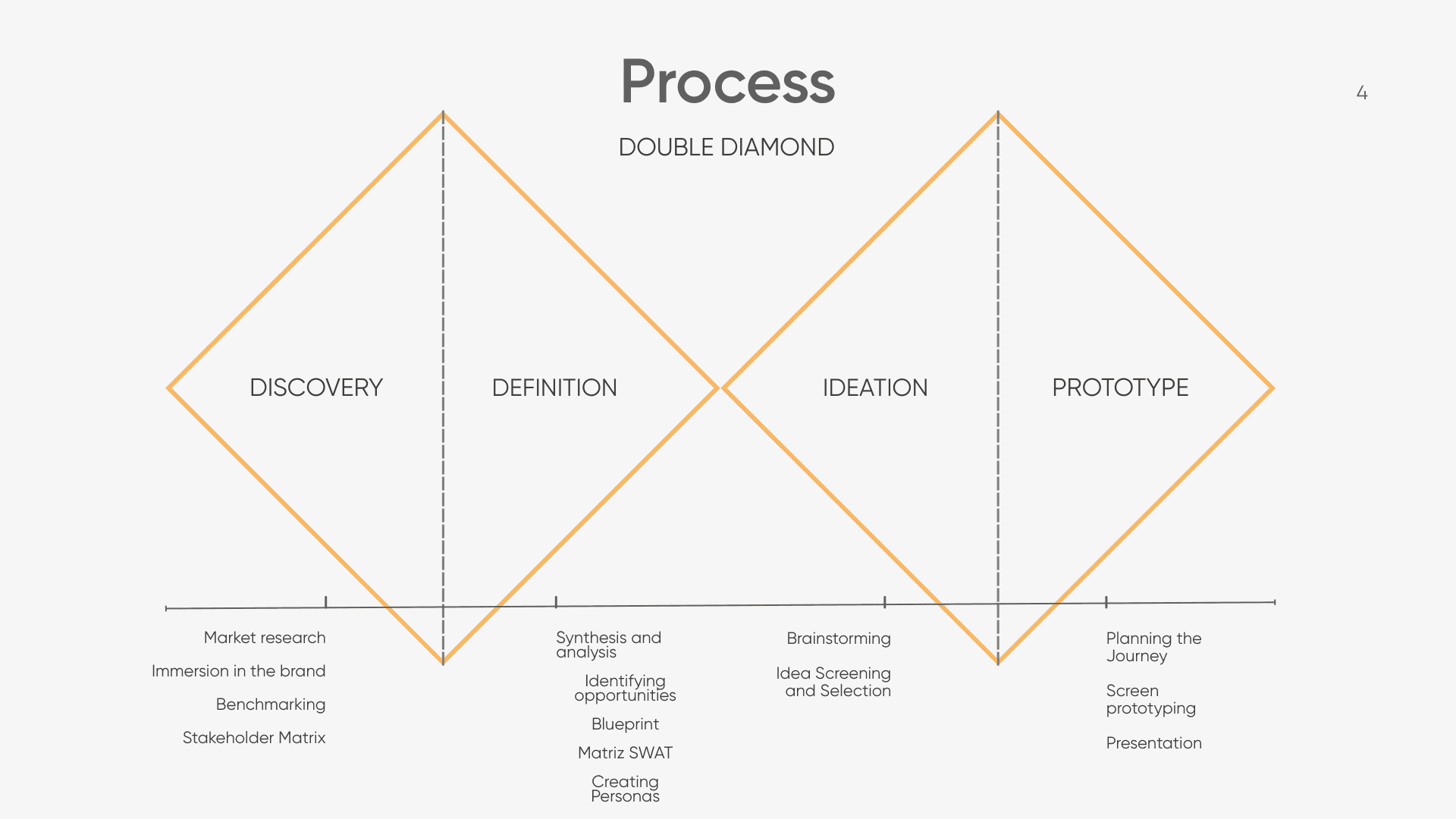
To understand both internal and external perceptions, I conducted an extensive research process combining:
Market and sector analysis (Brasscom, McKinsey, Google for Startups);
Benchmarking with leading tech and hybrid companies (Localiza Labs, DTI, Santander, Hotmart);
Stakeholder mapping across HR, Marketing, Communication, and Engineering;
Interviews with employees, recent hires, leaders, and recruiters;
Persona creation representing future talents, juniors, seniors, and leaders;
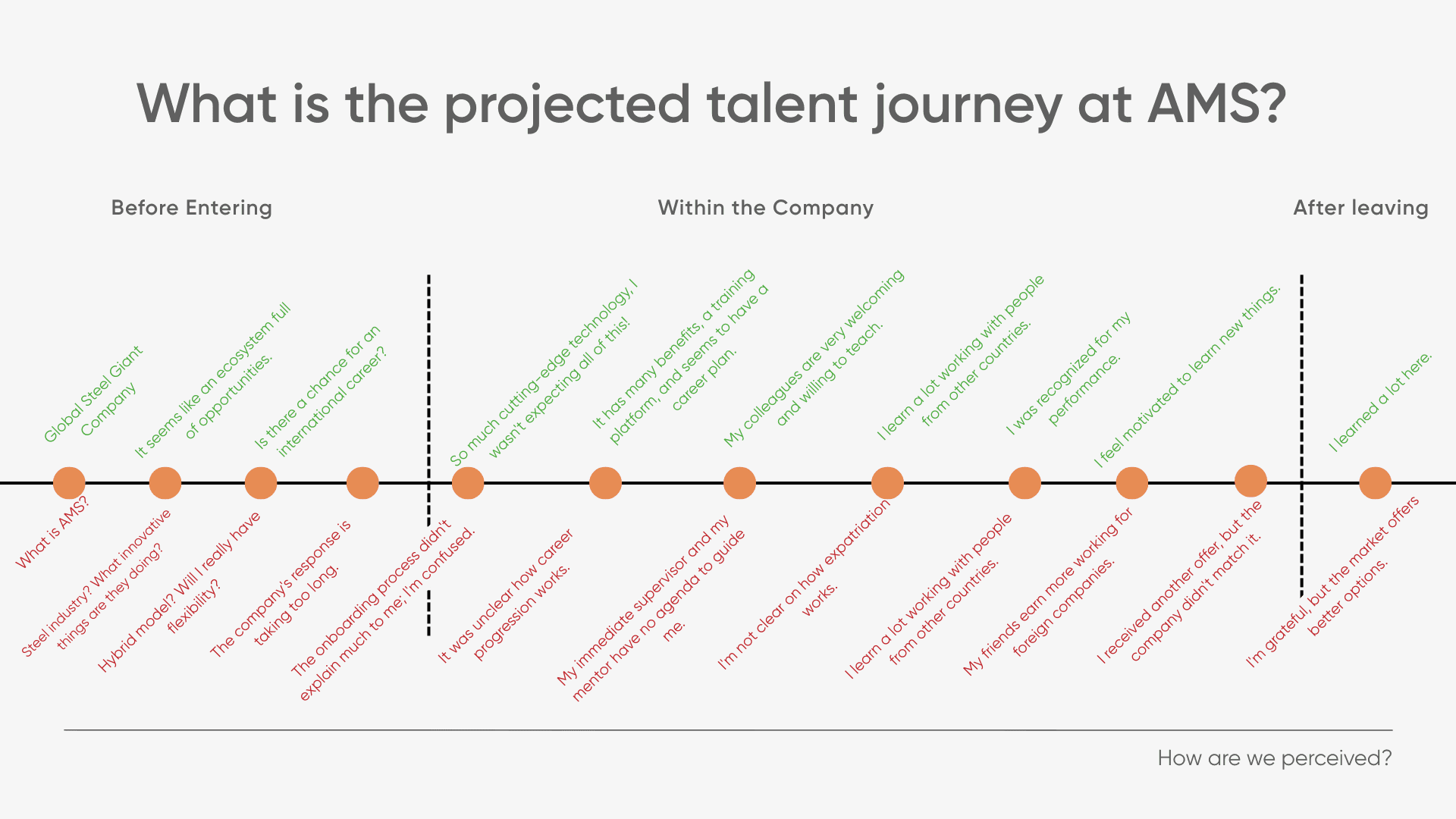
Employee journey mapping to identify friction points from recruitment to retention.
These insights revealed that the company’s strong internal culture was not reflected externally — the employer brand was invisible to its target audience.
Insights
The company was perceived as “industrial,” not “technological.”
Communication channels lacked strategy and consistency.
Processes like onboarding and recruitment created frustration.
The company had a highly inclusive and collaborative culture that wasn’t being communicated.
There was potential to position the brand as a school-company that develops talent and drives innovation within the steel industry.
downloads
01
02
see also


